Letter on Publicly Soliciting Opinions on the "Benchmark for Administrative Penalty Discretion in Work Safety (Draft for Comment)"
In order to establish and improve the administrative discretion benchmark system, standardize the exercise of work safety administrative penalty discretion, and protect the legitimate rights and interests of citizens, legal persons, and other organizations, our Ministry has drafted the "Benchmark for Administrative Penalty Discretion in Work Safety (Draft for Comment)" and is now publicly soliciting opinions from society. The deadline for feedback is November 15, 2023. Please send feedback to the email address aqscfzjs@163.com.
Contact Person and Phone: Chen Yu, 010-84657872.1. Benchmark for Administrative Penalty Discretion in Work Safety (Draft for Comment)2. Drafting Notes on the Benchmark for Administrative Penalty Discretion in Work Safety (Draft for Comment)Department of Safety Enforcement and Industrial & Commercial Supervision, Ministry of Emergency Management
Attachment 1:
Benchmark for Administrative Penalty Discretion in Work Safety (Draft for Comment)
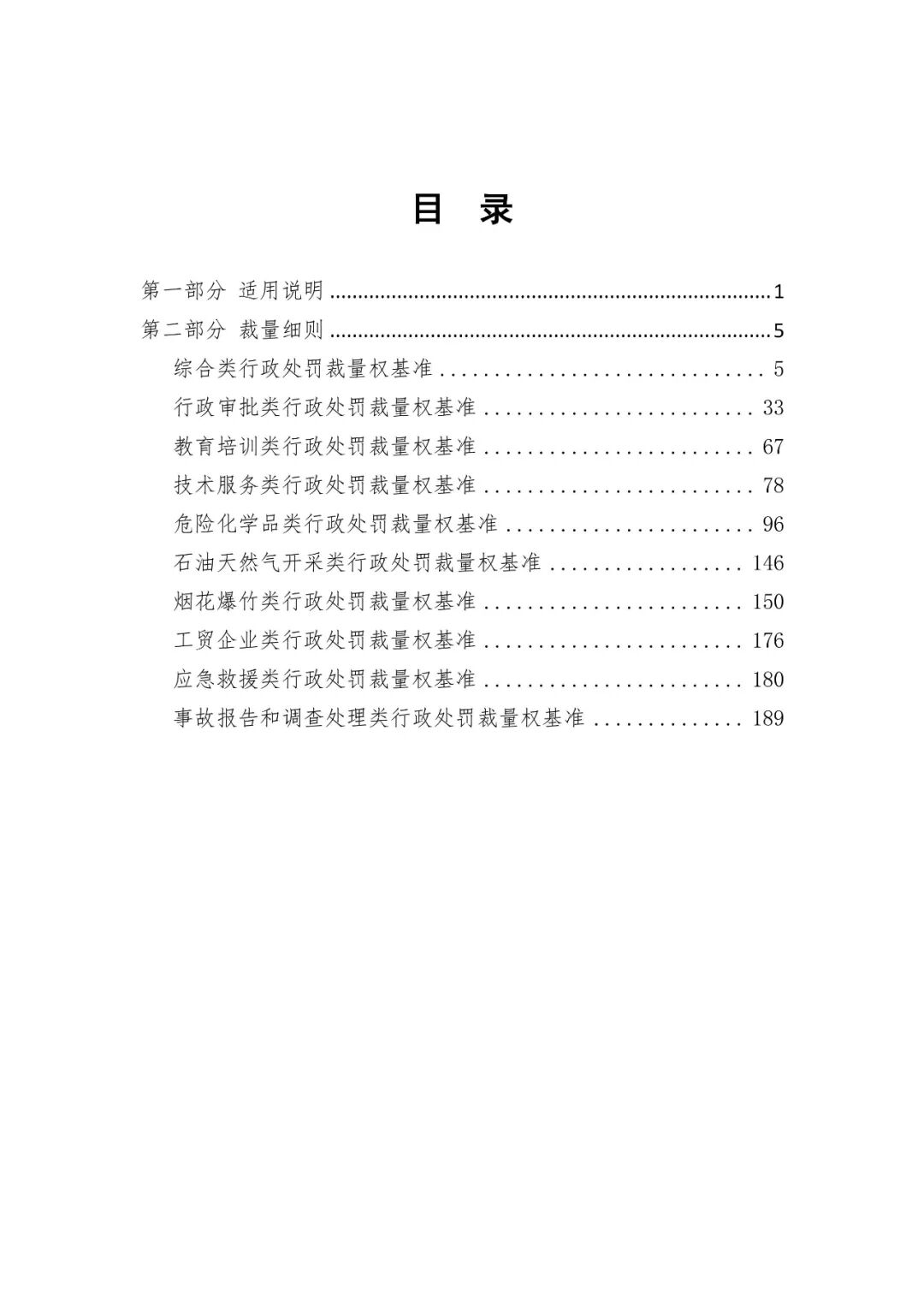
Click "Read Original" at the end of the article to view the full text of the "Draft for Comment"
Attachment 2
Drafting Notes on the "Benchmark for Administrative Penalty Discretion in Work Safety (Draft for Comment)"To correctly apply the newly revised and promulgated work safety laws, administrative regulations, and departmental rules, standardize the benchmark for administrative penalty discretion exercised by emergency management departments, better protect the legitimate rights and interests of market entities and the people, and achieve law-based administration and fair law enforcement, the Department of Safety Enforcement and Industrial & Commercial Safety Supervision of the Ministry of Emergency Management drafted the "Benchmark for Administrative Penalty Discretion in Work Safety" (hereinafter referred to as the "Benchmark"). The relevant details are explained as follows.
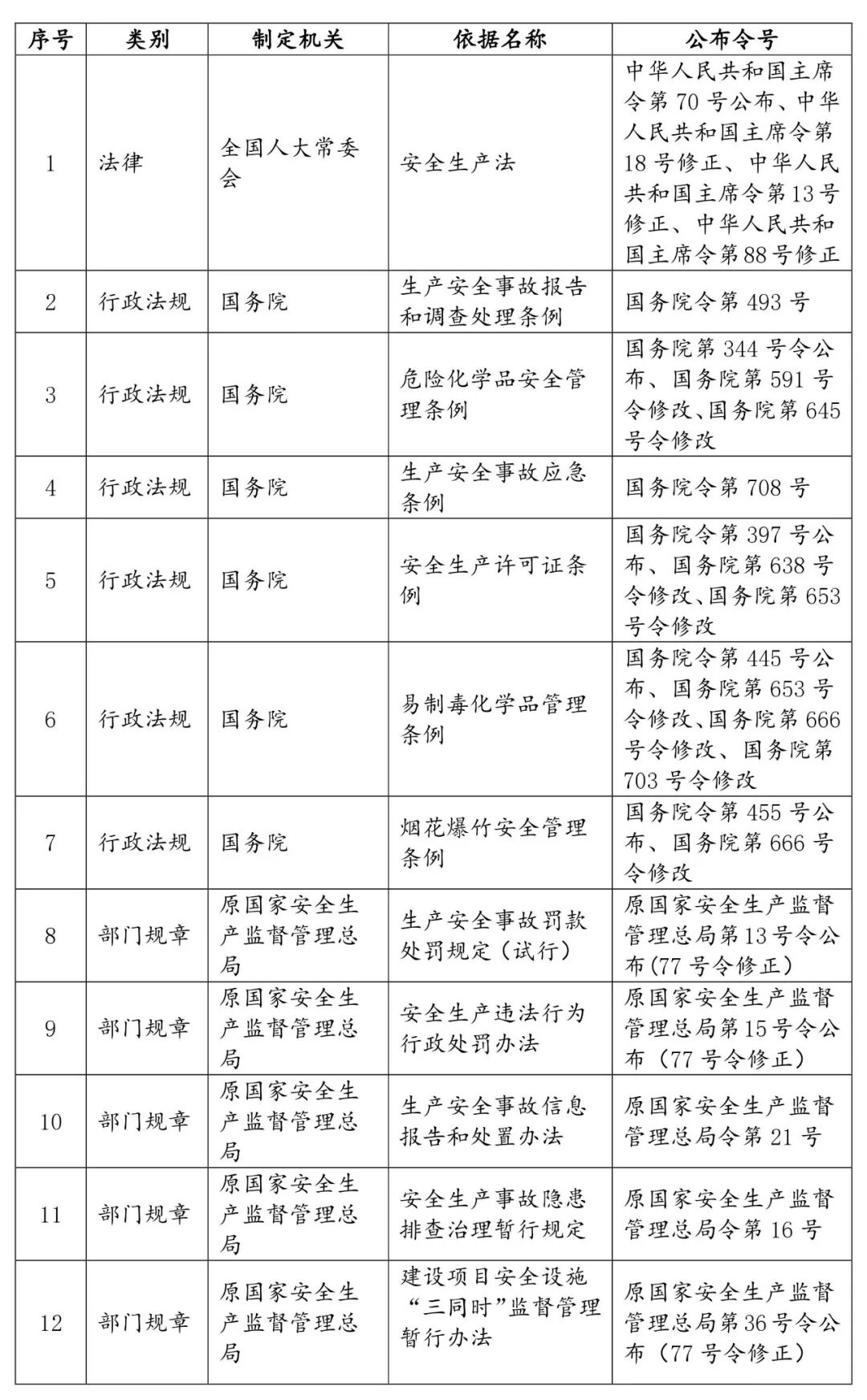
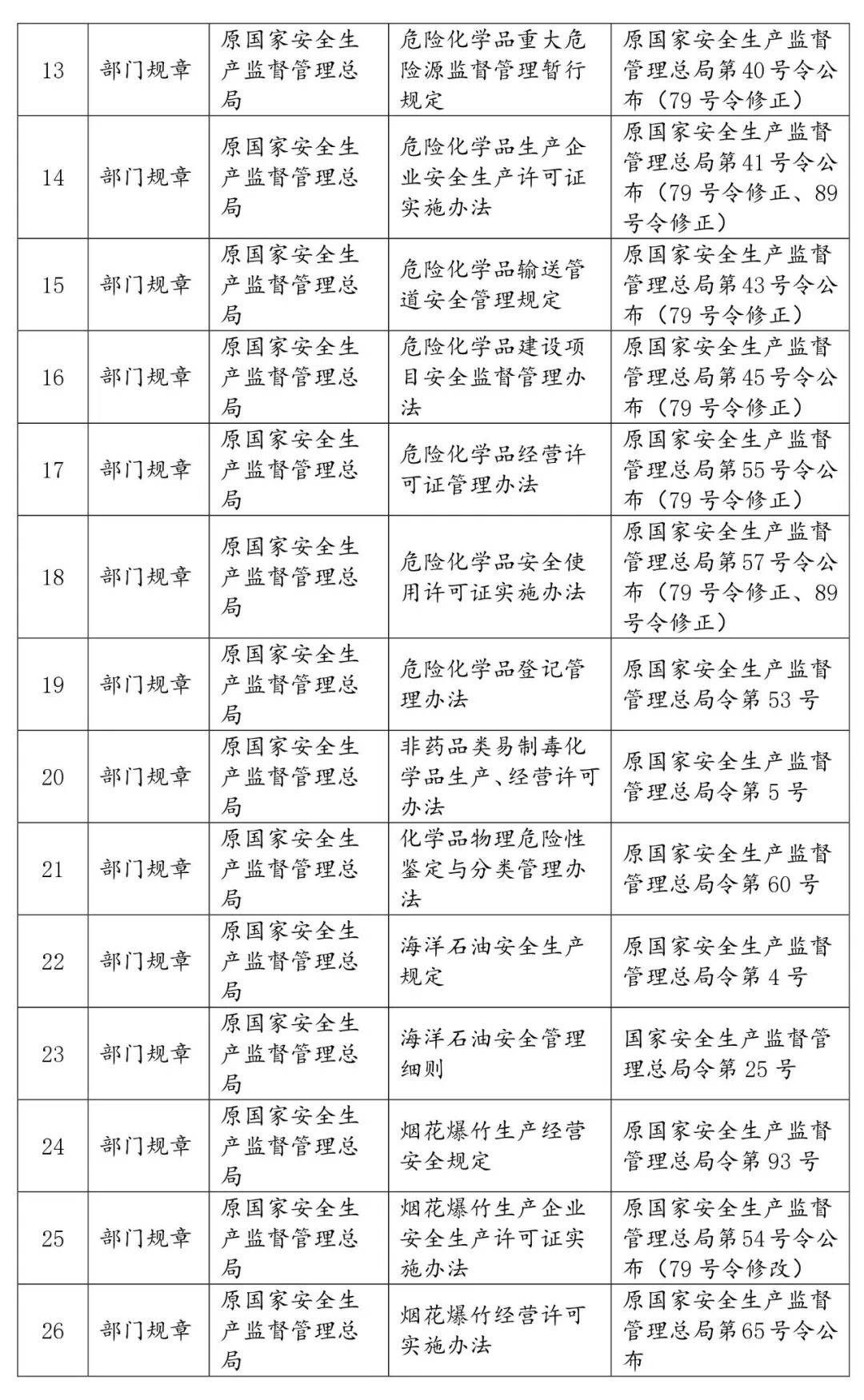
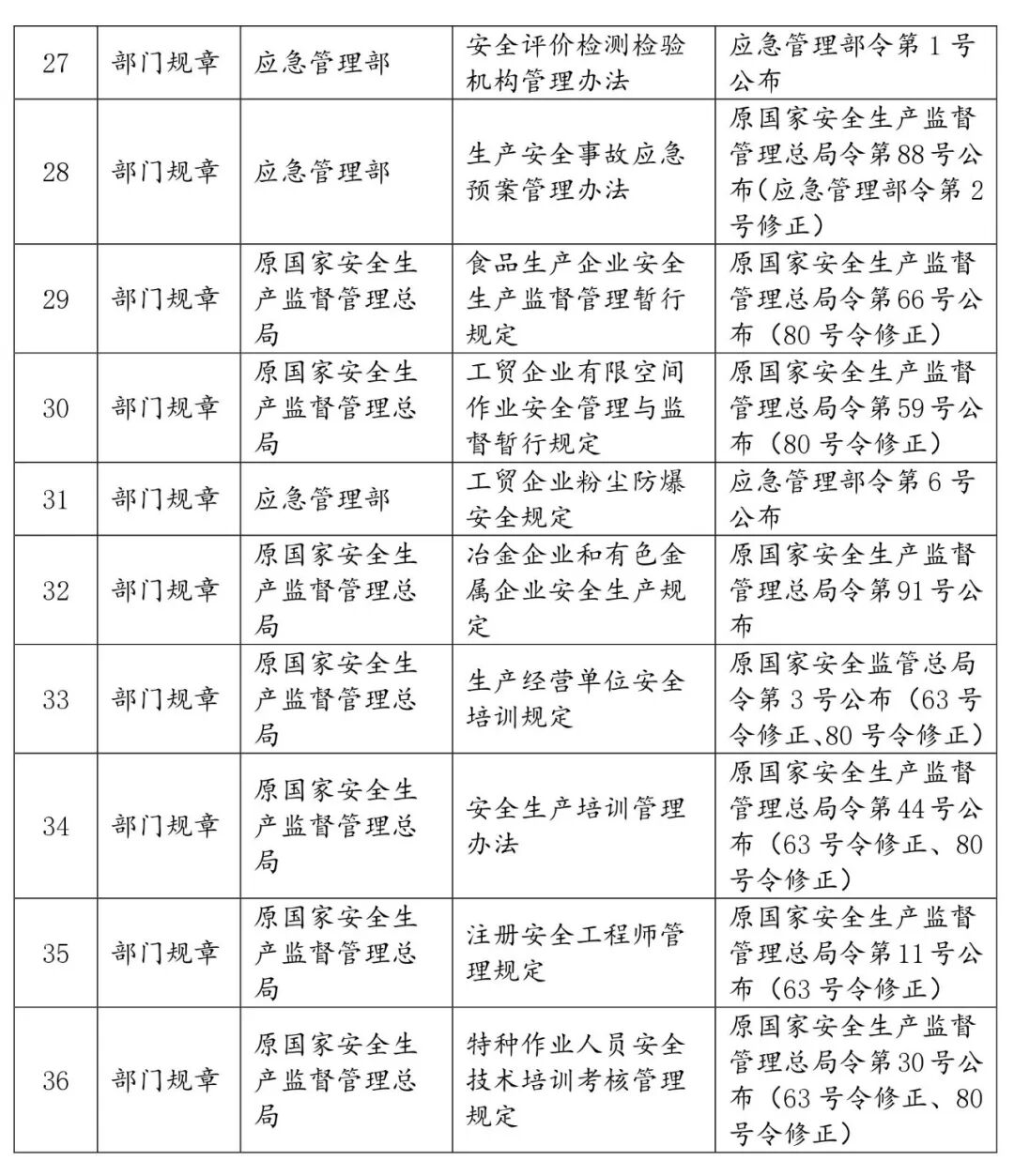
The Benchmark for Administrative Penalty Discretion in Work Safety is an important guide for guiding and standardizing emergency management departments to correctly exercise administrative penalty discretion, further standardizing work safety law enforcement behavior, and effectively promoting law-based administration. The "Standards for Discretion in Work Safety Administrative Penalties" formulated by the former State Administration of Work Safety in 2010 was formulated a long time ago, and its overall content is relatively outdated. Although some regions have formulated relevant standards for work safety administrative penalty discretion, the discretion scales are inconsistent, leading to problems such as "different penalties for similar cases" in practice. Since the 18th National Congress of the Communist Party of China, with the comprehensive advancement of rule of law and strengthening of law-based governance, using legal thinking and legal means to solve work safety problems, a series of work safety-related laws and regulations have been successively formulated and revised, especially the amendments to the Administrative Penalty Law and the Work Safety Law in 2021, which accelerated the pace of work safety legal system construction; therefore, the improvement of the administrative penalty discretion benchmark system should also be accelerated. In 2014, the "Decision of the CPC Central Committee on Major Issues Concerning Comprehensively Advancing Rule of Law" proposed establishing and improving the administrative discretion benchmark system, refining and quantifying administrative discretion standards, and standardizing the scope, types, and extent of discretion. In 2019, the "Decision of the CPC Central Committee on Several Major Issues Concerning Upholding and Improving the System of Socialism with Chinese Characteristics and Advancing the Modernization of the National Governance System and Governance Capacity" emphasized strictly standardizing fair and civilized law enforcement and standardizing law enforcement discretion. In 2022, the "Opinions of the General Office of the State Council on Further Standardizing the Formulation and Management of Administrative Discretion Benchmarks" further clarified the need to attach great importance to the formulation and management of administrative discretion benchmarks, strictly formulate benchmarks for each department and system scientifically and reasonably in accordance with statutory procedures, and made detailed requirements. In order to implement the decisions and deployments of the CPC Central Committee and the State Council, better apply the revisions of laws and regulations such as the Work Safety Law, ensure the effective implementation of laws and regulations, further standardize work safety administrative law enforcement behavior, and safeguard social fairness and justice, this Benchmark was researched and formulated.(I) Collecting Materials and Coordinating PromotionCollected the "Benchmarks for Discretion in Work Safety Administrative Penalties" formulated by Beijing Municipality, Shandong Province, Hunan Province, Jiangsu Province, and other provinces. Combined with the relevant requirements of the "Opinions of the General Office of the State Council on Further Standardizing the Formulation and Management of Administrative Discretion Benchmarks," the formulation principles and basic framework of the "Benchmark" were clarified.(II) Systematic Sorting and CategorizationIdentified 36 laws, administrative regulations, and departmental rules involving work safety administrative penalties. Organized the penalty provisions corresponding to work safety illegal acts in each law, regulation, and rule, and compiled them into tables according to the format of illegal act, legal provision, penalty basis, discretion tiers, applicable conditions, and specific standards. On this basis, they were re-categorized and sorted according to different types of illegal acts, forming the "Benchmark" (First Draft).(III) Concentrated Discussion and Connection VerificationDuring the compilation of the "Benchmark," relevant experts were organized to conduct concentrated discussions and revisions in Jiangsu from May 22 to May 25, modifying and improving the "Benchmark" (First Draft). In addition, adopting the opinions of relevant experts, it was connected with the "Guidance Catalog of Comprehensive Administrative Law Enforcement Matters for Emergency Management (2023 Edition)" (Emergency [2023] No. 70) issued by the Ministry of Emergency Management.(IV) Soliciting Opinions and RefinementSolicited opinions from the Personnel Bureau, Rescue Coordination Bureau, Hazardous Chemicals Supervision Bureau I, Hazardous Chemicals Supervision Bureau II, Policy and Regulations Bureau, Planning and Finance Bureau, and Investigation and Statistics Bureau, totaling 27 suggestions, of which 20 were adopted and 7 were not. The unadopted opinions involved suggestions to add content related to the "Implementation Measures for Work Safety Permits of Non-Coal Mine Enterprises" and to delete the discretion rules for "failure to purchase work safety liability insurance." Meanwhile, preliminary opinions from local emergency management departments were solicited. On the basis of studying the above opinions and suggestions one by one, after repeated revisions and improvements, the current "Benchmark" (Draft for Comment) was formed.(I) Principle of LegalityThe formulation of the administrative penalty discretion benchmark must be based on laws, administrative regulations, and departmental rules. The delineation of discretion tiers, levels, and specific standards must conform to the legislative intent. In legal application, the principles of higher-level laws prevailing over lower-level laws, special laws prevailing over general laws, and new laws prevailing over old laws are followed. It is strictly limited to the scope of penalty types and discretion space set by the Administrative Penalty Law, the Work Safety Law, and relevant laws and regulations.(II) Principle of RationalityThe setting of the administrative penalty discretion benchmark needs to consider the rationality of the discretion tier setting, while ensuring that each tier maintains appropriate flexibility. Legal factors and factual factors should be comprehensively considered to avoid law enforcement officers imposing disproportionately heavy or light penalties for illegal acts with similar behaviors and comparable harmful consequences. (III) Principle of ProportionalityIn the process of administrative penalty discretion, both the realization of administrative law enforcement purposes and the protection of the counterparty's rights and interests must be taken into account. On the premise of giving play to the initiative and flexibility of the administrative organ and its staff, adverse impacts should be restricted to the smallest possible scope and extent, ensuring that the penalty fits the offense.(IV) Principle of Fairness, Justice, and OpennessFor similar types of illegal acts with basically similar illegal facts, nature, and circumstances, the same legal basis and discretion range should be applied as much as possible. Law enforcement procedures and adjudication results should meet the requirements of fairness and justice in administrative law enforcement. At the same time, the basis, procedures, and benchmarks for administrative penalty discretion should be publicized within the scope of the law, strictly adhering to the principles of fairness, justice, and openness.Mainly researches the currently effective total of 36 laws, administrative regulations, and departmental rules involving work safety administrative penalties in the work safety field. See the table below for details:
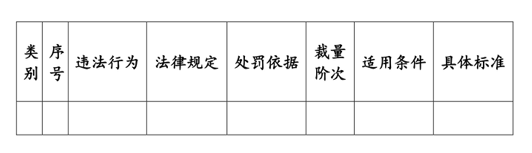
(II) Discretion Rules Framework1. Article Structure. The discretion rules are divided into six parts: illegal act, legal provision, penalty basis, discretion tiers, applicable conditions, and specific standards. The illegal act, legal provision, and penalty basis mainly cite the original text of legal provisions. Based on the specific content of the legal provisions, illegal acts are graded according to different standards to determine discretion tiers, applicable conditions, and specific standards. The specific format is as follows:
2. Article Terminology. None of the involved laws and regulations specify whether "above" and "below" include the base number. For ease of practical application, referring to relevant provisions of other laws, the "Benchmark" clarifies that "above" includes the base number, and "below" includes the base number only for those naturally including the base number as stipulated by law and the highest tier "below"; all others do not include the base number.1. Illegal Acts. Mainly cites legal provisions, referencing specific articles, paragraphs, and items; one paragraph or one item constitutes one illegal act.2. Legal Provisions. Mainly cites legal provisions, citing the content of obligation clauses and prohibitive clauses in laws, administrative regulations, and departmental rules corresponding to the illegal acts.3. Penalty Basis. Mainly cites legal provisions. Where laws, administrative regulations, and departmental rules all stipulate the same illegal act, they are listed in order of hierarchical effectiveness.4. Discretion Tiers. The administrative penalty discretion benchmark system mainly follows the principles of legality, rationality, proportionality, and fairness, justice, and openness. Combining legislative purpose, legal basis, penalty types, and penalty ranges, and comprehensively considering factors such as illegal facts, nature, means, circumstances, consequences, and corrective measures, the specific provisions are subject to graded discretion, and fine amounts are refined. Various illegal acts are delineated into different basic discretion tiers such as A, B, C, D, etc., from low to high based on social harmfulness, severity of circumstances, etc.5. Applicable Conditions and Specific Standards. In accordance with the relevant provisions of the Administrative Penalty Law and the "Opinions of the General Office of the State Council on Further Standardizing the Formulation and Management of Administrative Discretion Benchmarks" (Guo Ban Fa [2022] No. 27), the work safety administrative penalty discretion is filed and categorized. Applicable conditions specifically include: amount of illegal gains, number of illegal acts, quantity of illegal items, project investment amount, number of employees in the employing unit, duration of the illegal act, accidents, and severity of the illegal act, etc. The setting of specific standards only targets fines among administrative penalty types, and only those with a penalty amount range of RMB 10,000 and above. For illegal acts with a fine range within RMB 10,000, and those difficult to divide into discretion tiers, to safeguard law enforcement operational space, no discretion benchmark is set. For those with a maximum fine greater than RMB 10,000 but less than RMB 50,000, the tier is generally RMB 10,000-20,000; for those greater than RMB 50,000 but less than RMB 100,000, the tier is generally RMB 20,000-40,000; for those greater than RMB 100,000 but less than RMB 500,000, the tier is generally RMB 50,000-200,000; for those with a maximum fine greater than RMB 500,000, the tier is generally RMB 200,000-300,000. Examples are given below:(1) Illegal Gains Standard. For example, based on Article 103, Paragraph 1 of the Work Safety Law which stipulates discretion based on illegal gains, the discretion benchmark is: